In a world that moves quickly and often looks away, some lives survive only because someone chooses to stop.
Mayor Sahib was one of those lives.
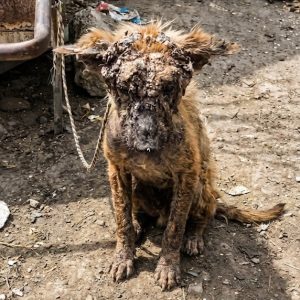
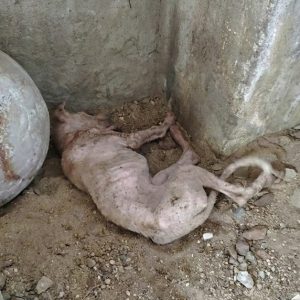
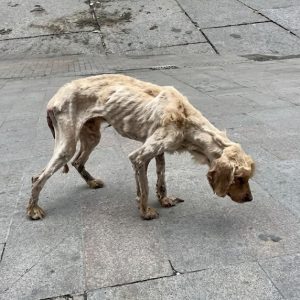
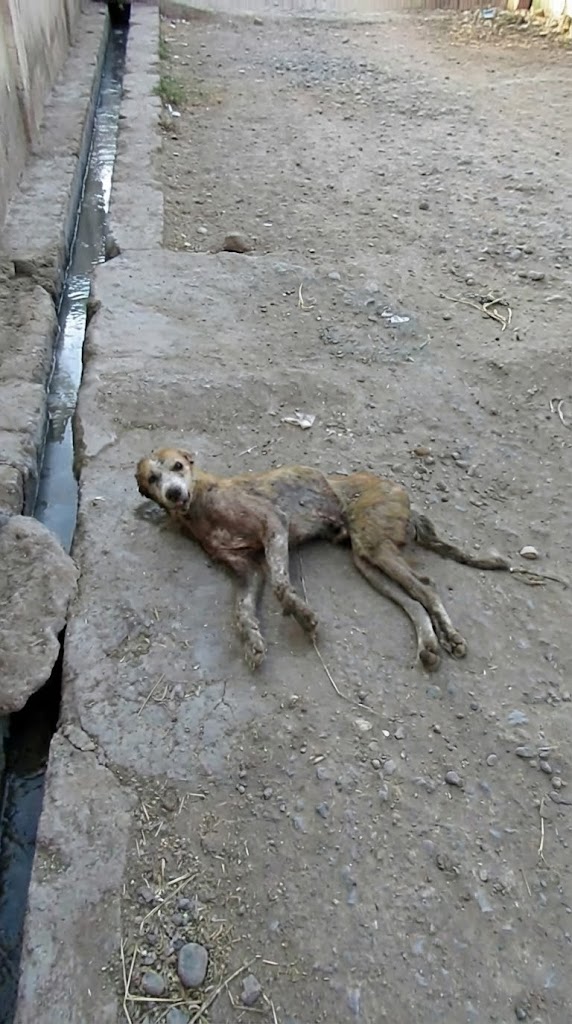
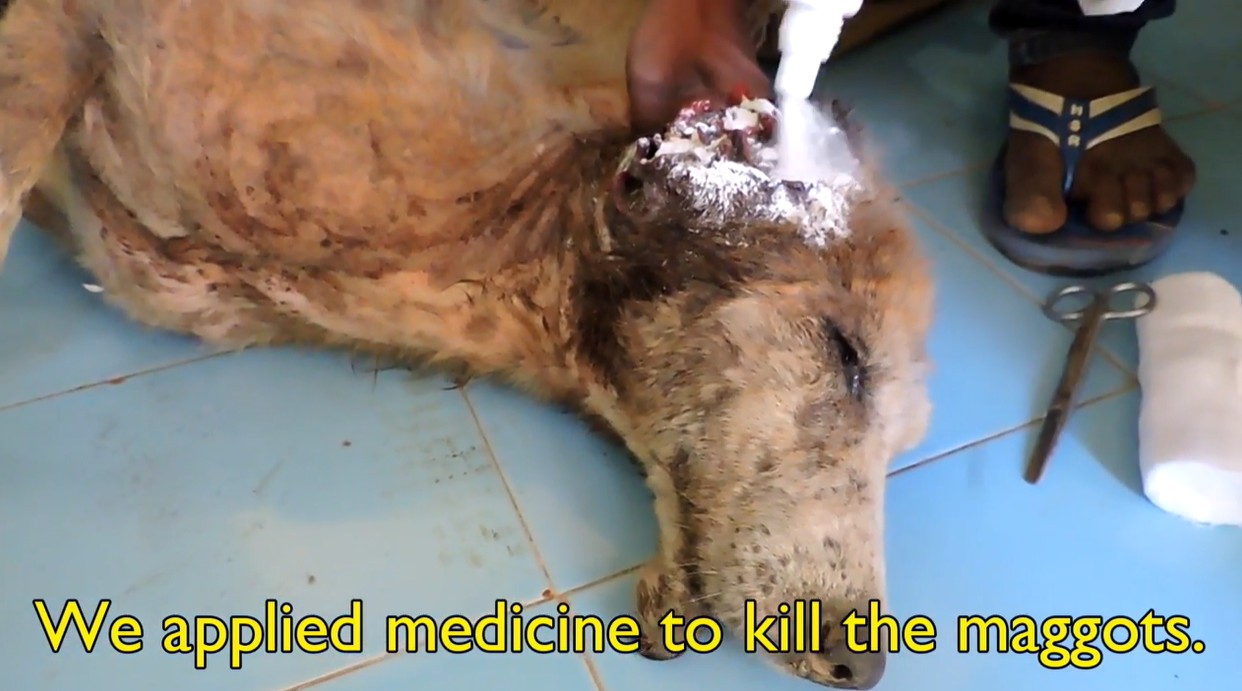
When he was first found, he lay helplessly beside a busy road, as if his body had finally reached the end of everything it could endure. He was frighteningly thin. His skin was ravaged by severe mange. And in his eyes was the kind of exhaustion that only comes after too much pain carried for too long.
But what made the moment even harder to witness was the condition of his head.
One side had been overtaken by a deep, infected wound. His ear was nearly gone. The damage was severe enough that it was difficult not to wonder how long he had been suffering in silence while the world continued past him.
He looked like a dog who had been asked to survive far beyond what should ever have been possible.
And yet, he was still there.
Still breathing.
Still waiting.
Still holding on.
A Life That Seemed Almost Slipping Away
At first glance, it would have been easy for someone to assume that nothing more could be done.
Mayor Sahib was old, weak, and visibly overwhelmed by pain. His body looked worn down by years of hardship. Every part of him suggested a life lived without protection, without comfort, and without timely care. If rescuers had arrived even a little later, the outcome might have been very different.
But something in him remained.
There was still a quiet strength there.
And once help finally reached him, that strength began to show itself in ways no one expected.
From the very beginning of treatment, Mayor Sahib responded. Not dramatically, not all at once—but enough for everyone around him to see that he had not given up. It was as if some part of him had been waiting for this exact moment: the moment when someone would finally look at him and decide that his life still mattered.
VIDEO: He Was Lying by the Road With Almost Nothing Left — Until Mayor Sahib Was Finally Shown Mercy
The Slow Work of Bringing Him Back
Mayor Sahib’s recovery was never going to be simple.
His body was carrying the effects of long-term neglect, deep infection, skin disease, and severe tissue damage. Healing would take time. A great deal of time. There would be no quick fix, no overnight transformation, no easy path from where he had been found to where he needed to go.
So his care began the only way it could:
slowly,
carefully,
patiently.
Day by day, the team treated his wounds. The infection had to be managed. His damaged skin needed ongoing attention. His weakened body had to be supported gently, without asking more from him than he could give. Every step was measured. Every sign of improvement mattered.
And those signs came.
His wounds began to close little by little.
The raw damage on his skin slowly started to heal.
His body, once so frail, began to regain strength.
In rescue, this is often how hope looks—not dramatic, but steady. Not loud, but unmistakable.
A little more strength.
A little more alertness.
A little more life returning where pain had lived too long.
More Than Medical Care
But Mayor Sahib’s recovery was not shaped by treatment alone.
Medicine helped save his body.
Love helped bring back the rest of him.
The people caring for him did not see only a severe case, or an injured dog, or another difficult rescue. They treated him like family. That difference matters more than words can fully express. A body can heal under medical care, but a spirit often begins to return when it is met with softness, patience, and the feeling of being wanted.
Mayor Sahib received all of that.
Gentle hands.
Soft voices.
Time without pressure.
Care that stayed consistent.
And over time, something beautiful began to unfold.
The fear in his eyes softened.
The tension in his body eased.
The guardedness that pain had built around him began to loosen.
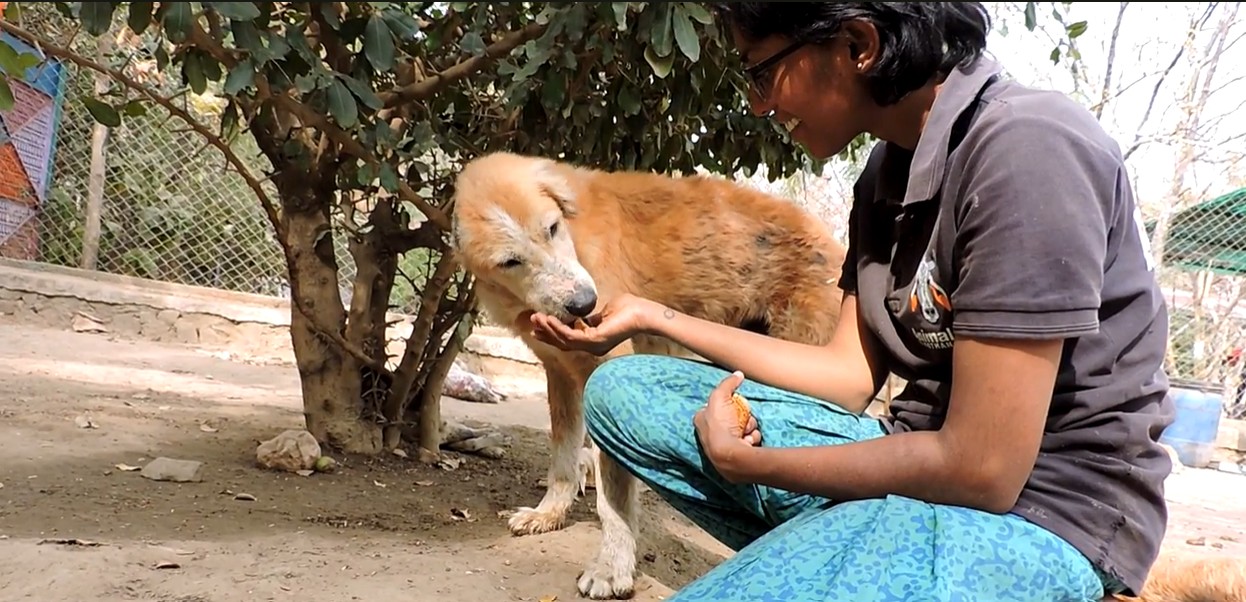
He started trusting again.
That kind of change is often the deepest one of all.
The Dog Beyond the Pain
As Mayor Sahib continued healing, he slowly stopped looking like the dog rescuers had first found at the roadside.
He was no longer the frail figure everyone feared might not survive another day. His body grew stronger. His skin improved. New fur began to grow. The visible damage that once defined every first impression started to fade, and beneath it, more of his true self came forward.
That is the quiet miracle of rescue.
Not that suffering ever happened.
But that it no longer gets the final word.
Today, Mayor Sahib is safe.
He is healthy.
He is loved.
And perhaps most importantly, he is no longer living in a body ruled entirely by pain.
His past has not disappeared.
But it no longer defines who he is.
Now, what defines him is something else:
his courage,
his gentleness,
and the peaceful life he was finally given the chance to know.
What Mayor Sahib’s Story Leaves Behind
Mayor Sahib’s journey reminds us that second chances do not belong only to the young, the easy, or the visibly hopeful.
Sometimes they belong to the ones who look almost too tired to keep going.
The ones whose suffering has lasted so long that people stop expecting recovery.
The ones who seem to have been forgotten by everyone—until one act of compassion changes everything.
That is what happened here.
A dog who looked nearly lost was given time.
A body that had endured too much was given treatment.
A life that had known only hardship was finally met with care.
And from that, healing began.
Mayor Sahib stands now as proof that love can restore what neglect tried to erase. That even when hope seems far away, it can still return when someone is willing to notice, to help, and to stay.
And that may be the most important truth his story leaves behind:
Sometimes a life is saved not by anything grand, but by the simple decision to care before it is too late.