It began with a moment that should have meant nothing.
A quick burst of instinct.
A sudden chase.
A dog running after a cat as if it were just another harmless game.
Then everything changed.
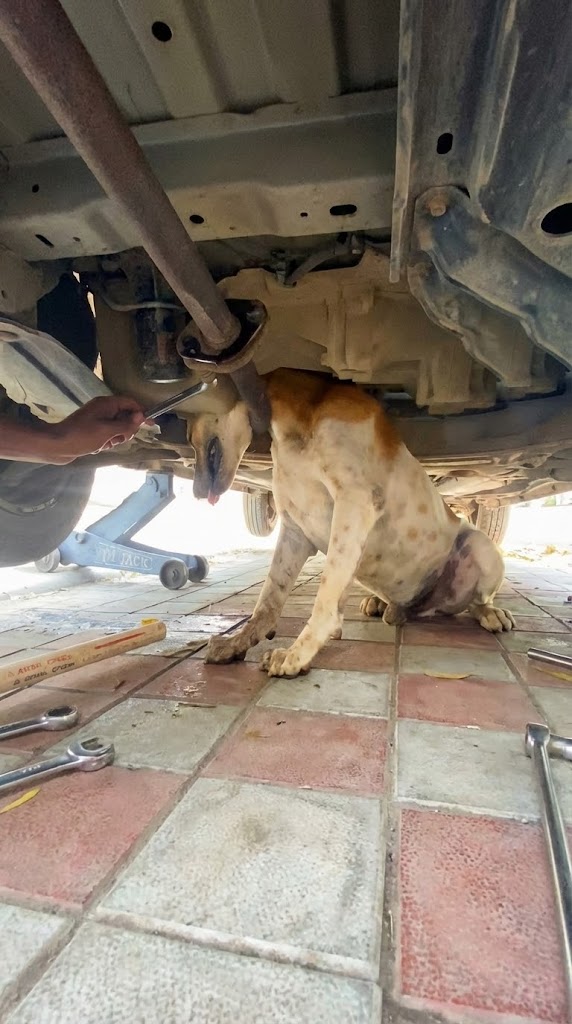
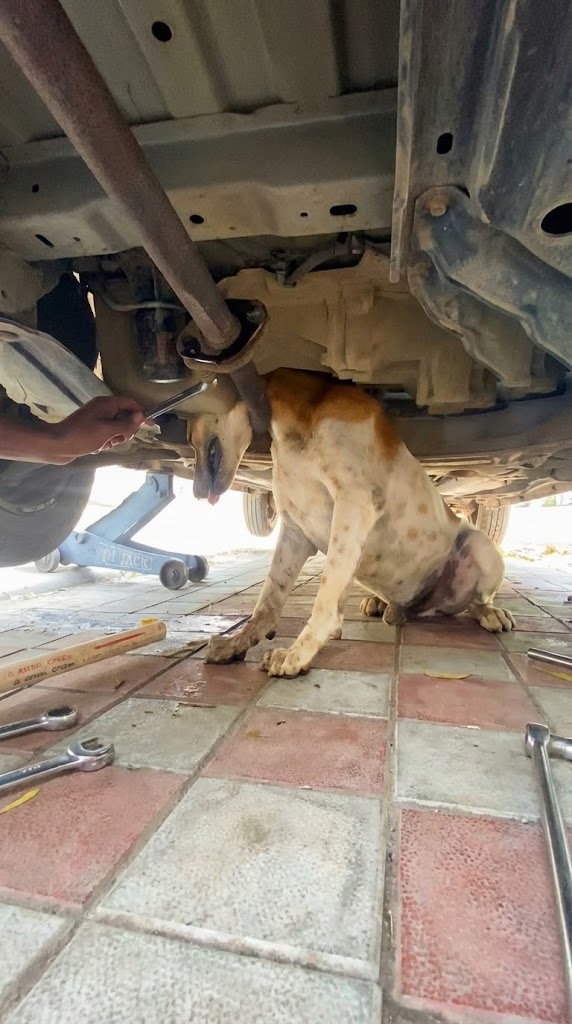
In a matter of seconds, the chase turned into something no one nearby could have imagined. The dog lunged forward, slipped, and became trapped with his head wedged tightly inside the narrow exhaust pipe of a parked car.
The more he struggled, the worse it became.
What may have begun as a playful impulse had turned into a life-threatening trap.
When rescuers from the Nirbhay Foundation arrived, the scene was unsettlingly quiet. The dog was stuck so tightly that even breathing appeared difficult. His body trembled with fear and exhaustion, and every passing moment added more danger to an already delicate situation.
This was not something that could be solved with force.
One wrong movement could cause terrible injury.
A Rescue That Required Precision, Not Panic
The team first tried the gentlest option.
They used their hands.
They spoke softly.
They moved carefully, hoping reassurance might calm him enough to make a safe release possible.
But the metal held firm.
And so did the trap.
The dog’s fear was rising. His body was tiring. It became clear that this was no ordinary rescue. If they were going to save him, they would need to stop thinking like rescuers for a moment and begin thinking like surgeons.
Not on a body.
On a car.
With the permission of the vehicle’s owner, who stood nearby watching with quiet concern, the team began dismantling the exhaust system piece by piece. Tools replaced leashes. Every bolt had to be loosened carefully. Every movement had to protect both the dog and the fragile position he was in.
It was slow work.
Focused work.
The kind of work where calm matters more than speed.
Throughout it all, one rescuer stayed close to the dog, keeping a steady hand on his trembling body and speaking to him in a soft voice. He could not fully understand the words, but he seemed to feel what mattered most:
that someone was trying very hard not to let anything worse happen to him.
Then at last, the metal gave way.
And the dog was free.
VIDEO: A Split-Second Chase Left One Dog Fighting to Breathe — and What Happened Next Saved Two Lives
The Moment Fear Turned Back Into Life
Once released, the dog wasted no time.
There was no dramatic pause. No long hesitation. He shook himself hard, as though trying to throw the terror off his body, and then ran—tail moving wildly as he disappeared back into the world he had nearly lost in a single instant.
For him, the nightmare ended there.
For the rescuers, the day was only beginning.
Before they had even fully packed away their tools, another call came in.
A dog had been hit by a car.
And once again, a life was waiting on the edge of uncertainty.
A Second Dog, A Different Kind of Fight
They found him lying by the roadside, still and trembling.
His eyes were wide with shock. Pain had made his whole body rigid. Fear had left him frozen in place. Unlike the first rescue, where danger came from a bizarre accident and visible entrapment, this one carried a quieter uncertainty.
The injuries were not yet fully known.
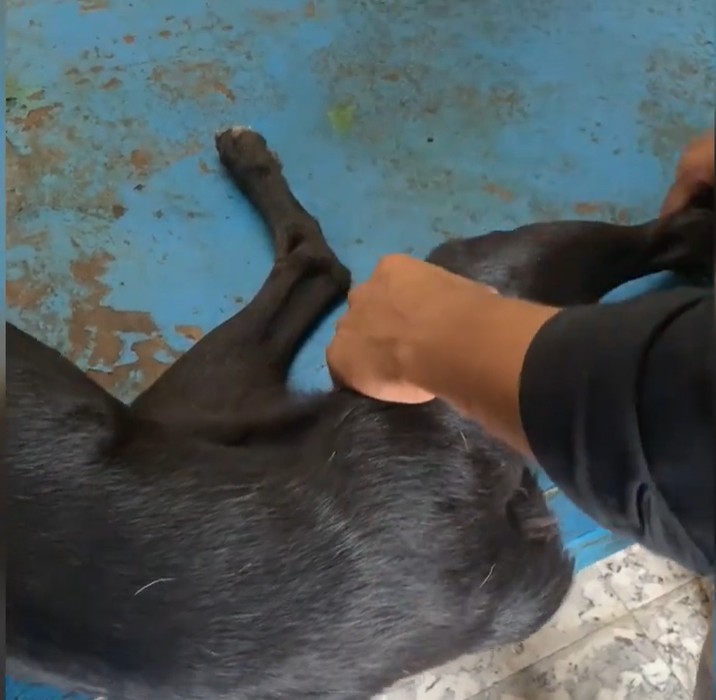
At the clinic, the veterinary team examined him carefully.
The first question was the most urgent: had the impact damaged his spine?
Miraculously, it had not.
There was no paralysis.
No permanent spinal injury.
But his leg had been badly fractured and would need serious treatment, time, and long-term care. His body had been hurt badly, but something in him remained intact.
His spirit had not given up.
And what stood out most was how he responded to help.
Even in pain, he did not snap.
He did not growl.
He did not resist the people trying to care for him.
It was as though some part of him understood that the hands around him were not there to cause more harm.
They were there to carry him out of it.
Healing That Happened in Small Moments
The team made the decision to keep him in their care for the long recovery ahead.
This was not the kind of healing that would arrive all at once. There would be no instant transformation, no single dramatic moment that solved everything. Instead, progress came in the quiet ways that matter most in rescue.
He stopped flinching quite so much when touched.
He accepted food from a human hand.
He began curling into blankets instead of shrinking away from them.
Those changes may have looked small from the outside.
But they were not small at all.
They were signs that fear was beginning to loosen.
That pain was no longer the only thing shaping his world.
That safety, little by little, was becoming something he could believe in.
Then one morning, came the moment everyone had been hoping for.
He stood.
Not steadily.
Not confidently.
But truly stood.
It was shaky.
Fragile.
Uncertain.
And then he took a step.
Just one.
But sometimes one step is enough to tell you everything.
It meant his body was trying.
It meant his future was still open.
It meant the life that had almost been stopped on the roadside was still moving forward.
What These Two Dogs Leave Behind
At first glance, these seem like two separate rescues linked only by timing.
One dog trapped in a car’s exhaust pipe after a sudden chase.
Another struck by a vehicle and left broken at the side of the road.
But together, their stories reveal something deeper.
Animals endure in ways that are easy to underestimate.
They survive fear.
They survive pain.
And even after terrifying experiences, many still remain open to care.
The first dog was saved by skill, patience, and the refusal to panic.
The second was saved by long-term commitment, quiet treatment, and the willingness to stay long after the emergency itself had passed.
Both were given the same essential gift:
someone chose not to look away.
That choice is what changes outcomes.
Sometimes rescue looks unusual—like dismantling part of a car to free a trapped head.
Sometimes it looks slow and humble—like waiting days for one injured dog to trust a blanket, a meal, or a hand.
But all of it matters.
And both dogs leave us with the same gentle truth:
Miracles do not always arrive loudly.
Sometimes they look like breath returning.
Sometimes they look like freedom.
And sometimes, after fear and pain, they look like one shaky step toward life.